Emma dives into the HS1 archive project – the what, how, and why of archaeological archiving. We’re documenting CSI’s work in real time – find all our blogs so far here.
Welcome back! It’s Emma, with another update on the project.
The DIY is now completed. The studio is officially up and running. Excitingly, we have acquired the empty shop unit next to CSI. This is now where we are slowly sifting through the archaeological finds from the HS1 Kent segment.
A HIGH-SPEED HISTORY OF HS1
The HS1 railway line runs from London St Pancras under the Channel to France. This 67 mile long route opened in 2003. Its construction started in 1998, with archaeology teams on hand. Many artefacts were found, everything from Roman coins to 18th century oil lamps. These thousands of objects now make up the HS1 Archive, which is owned by Kent County Council.
WHAT ARE WE DOING?
We are creating a digital archive of all the finds. Once finished, it will be available for anyone to access online, through the Historic Environment Record (HER). HERs are a great resource for anyone interested in finding out about archaeological sites, historic buildings and landscapes, as well as a key starting point for the planning of new built developments. They are coordinated by local authorities so our work on the HS1 archive will eventually join the Kent HER.
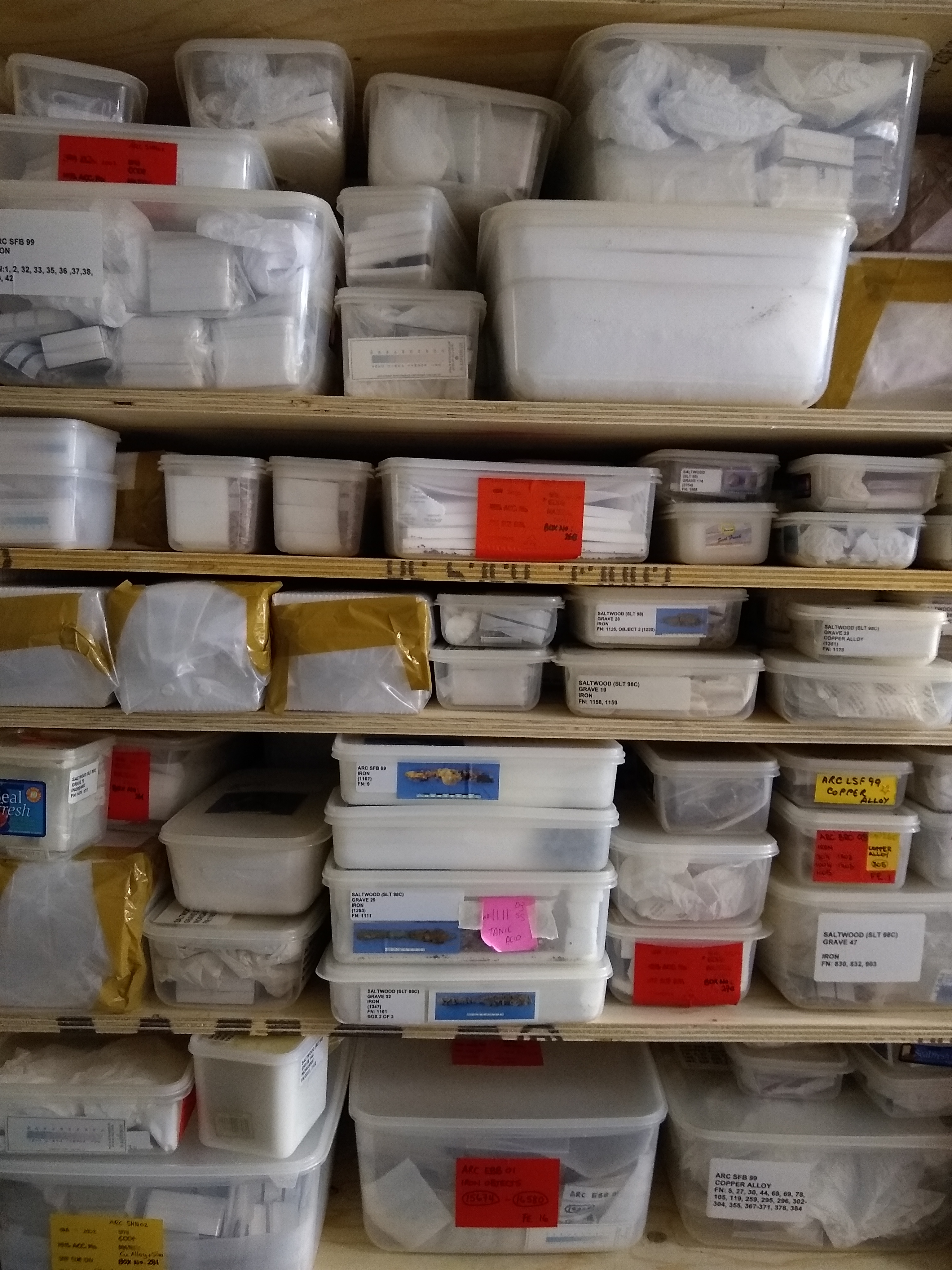
So, what is an archive anyway? It is a collection that stores and records items – in our case, ranging from brooches to knives to ancient antlers. Information includes where the object was found and the type of material, so that further research can build up a picture of the area at a certain time. This new digital archive acts as an accessible record, so that the physical objects are easy to find and don’t get forgotten about in boxes.
HOW DO WE LOOK AFTER THESE OBJECTS?
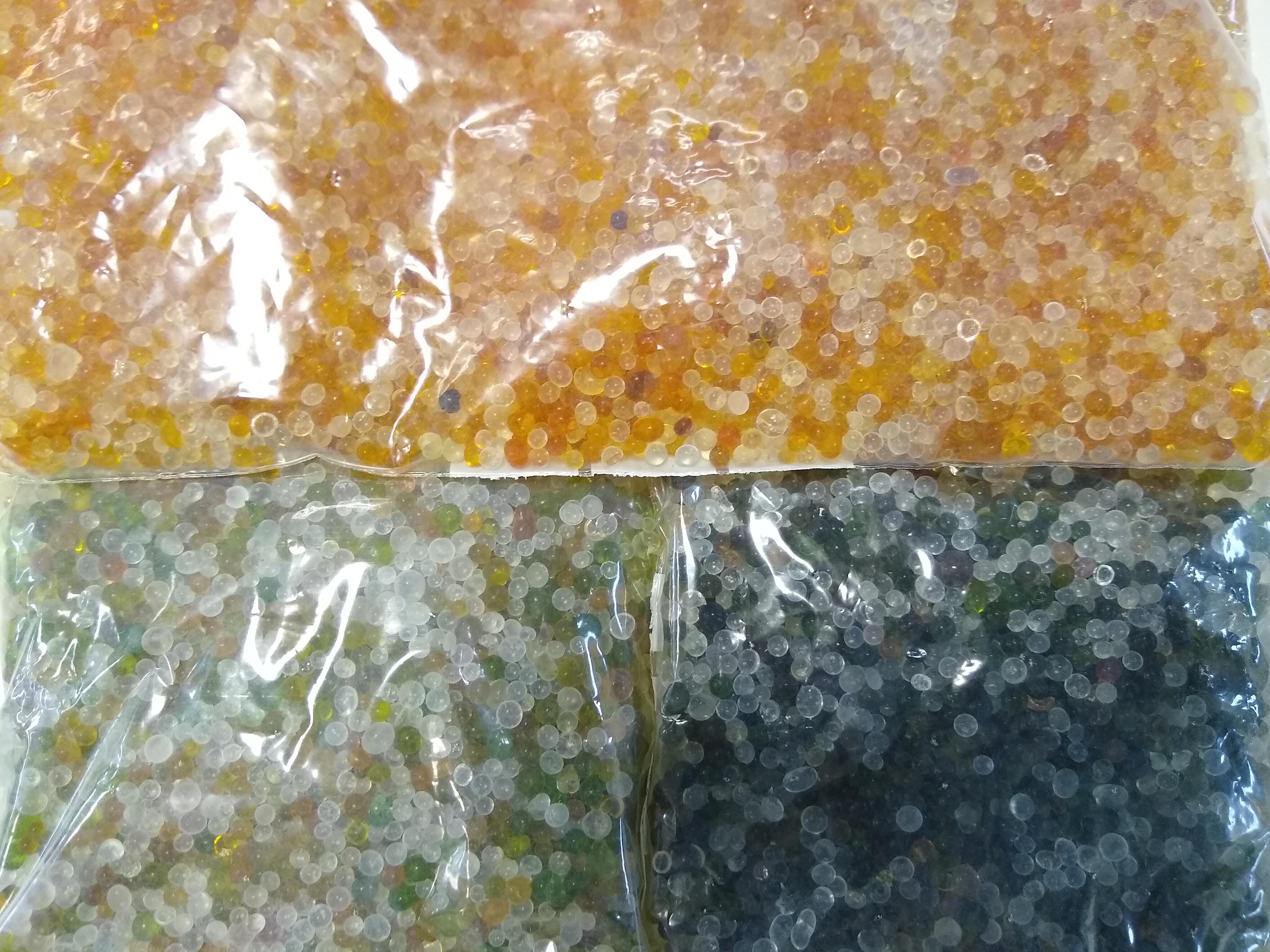
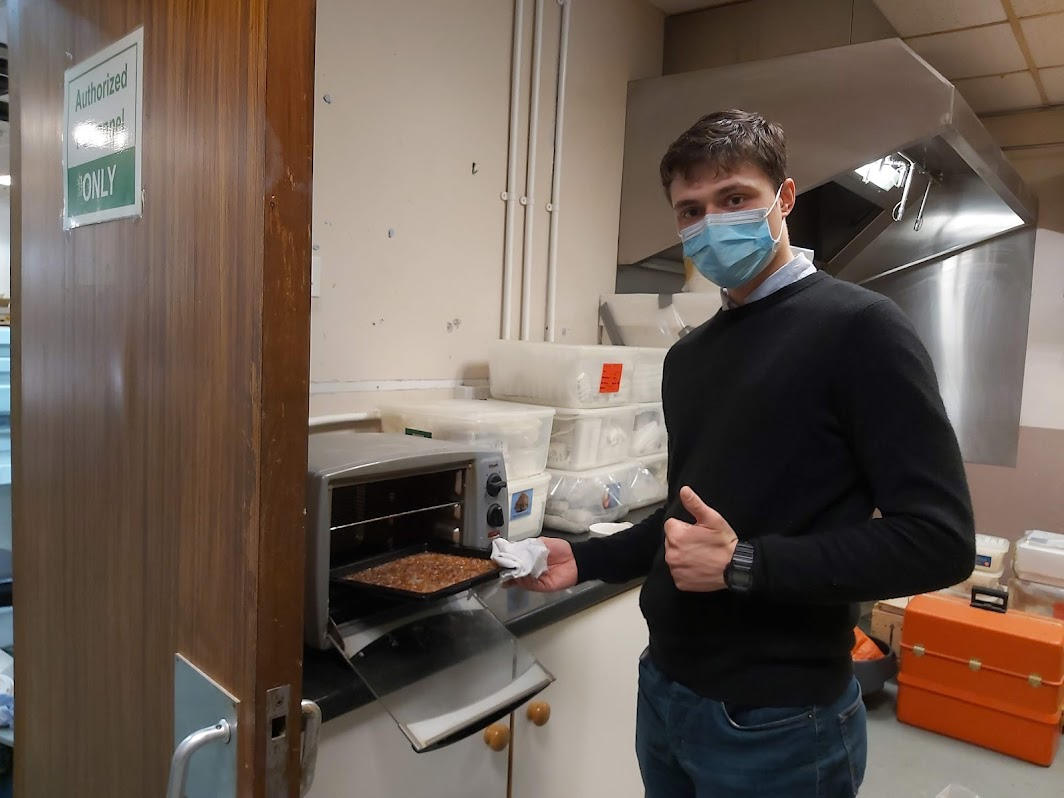
We are working on (mostly) metal finds, and for iron and copper objects, it is important that moisture does not reach them. Any moisture is potentially very harmful as it will trigger corrosion. Therefore, bags of silica gel are put in each box, which absorbs any moisture. It is reusable – these green and white beads will become pinky-orange after being reactivated by heating in an oven.
When recording for the digital archive, we colour code the boxes – bright red for any objects that need urgent conservation treatment. We have all been playing detective, for instance, a bright turquoise dust is a sign of copper corrosion.
WHY IS ARCHIVING WORTHWHILE? – A chat with Oli
I had a catch up with Oli, CSI Intern and Archaeology student, about the project.
Emma: How are you finding the project so far?
Oli: Cataloguing and conserving the HS1 archive is a real privilege.
E: Have you done anything similar before?
O: All of my prior experience in archaeology has either been in the classroom, or in fieldwork, therefore this has been an illuminating insight into the future of finds after they are excavated.
E: Any thoughts on archaeology that have come up during the project?
O: When you think about archaeology, your mind tends to picture an excavation – however this is only a small part of the work that goes into the end result, which is to further our knowledge of history.
E: Do you have a favourite find?
O: The archive boasts a diverse range of artefacts – I myself have seen ornate brooches, decorative game pieces, and many Roman coins with extant and readable Latin inscribed on them.
E: Why do you think this project is important?
O: Without a team of people to catalogue and conserve our archives, excavation could arguably be rendered futile.
FAVOURITE FIND OF THE WEEK
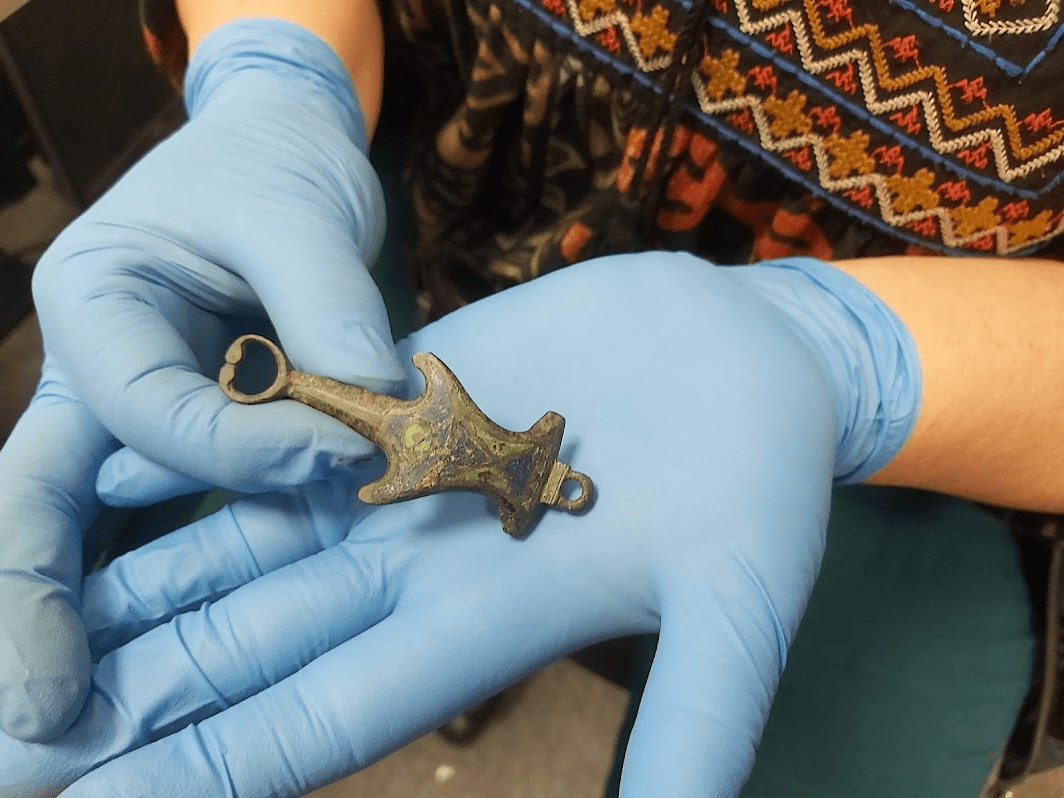
This week, I asked Liz about her favourite find. Pictured below, the object in her hands is a brooch – Liz liked how the colouring remains. You can see the blues and greens in the details.
WHAT’S NEXT?
There are still lots more boxes to digitally catalogue! We will be working on Mondays and Thursdays so please do drop by to see what we’re working on.

 CSI: Sittingbourne